


Chicago's Consulate General Moving to New Premises in the Lithuanian Diaspora Capital
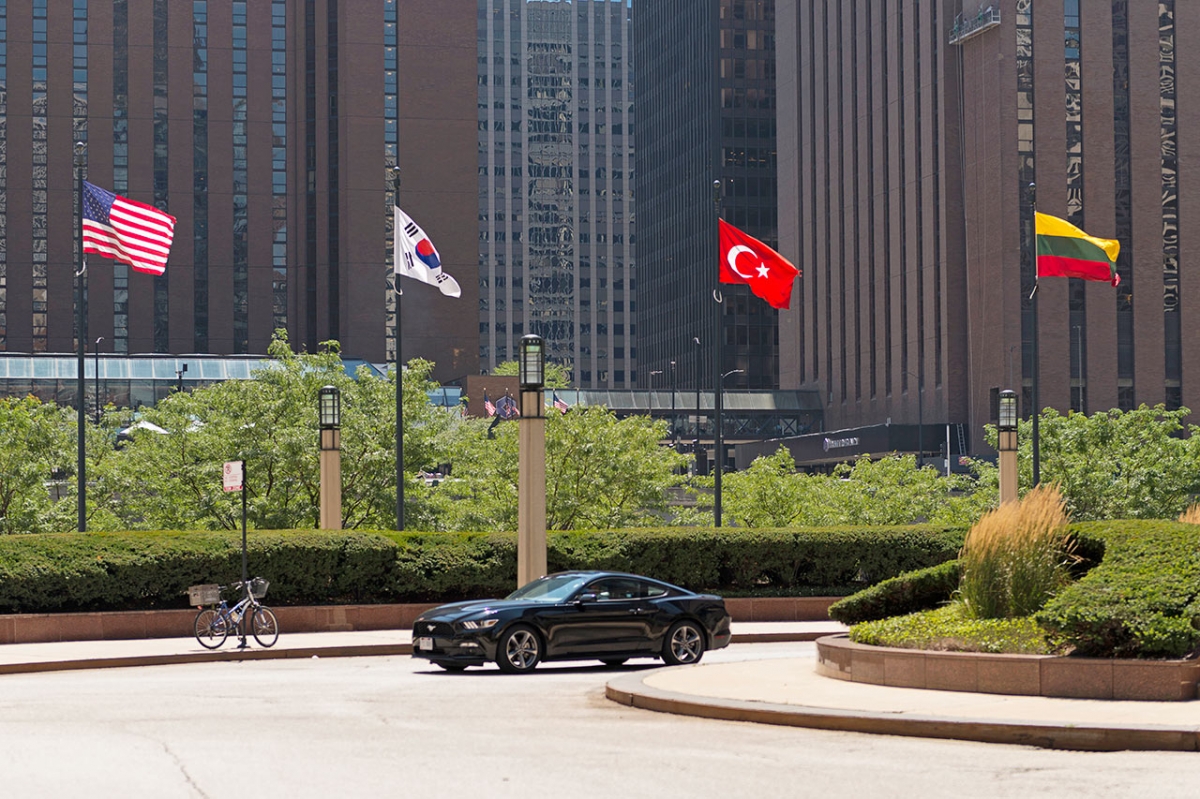
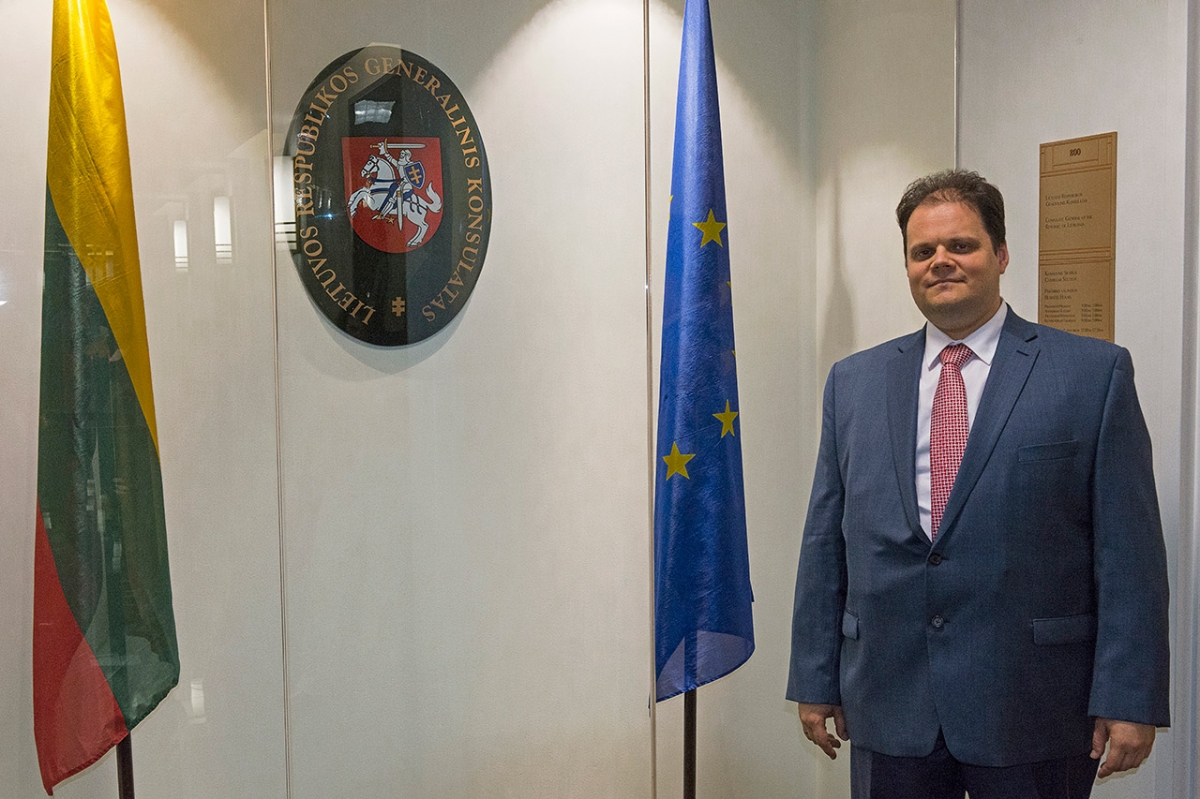
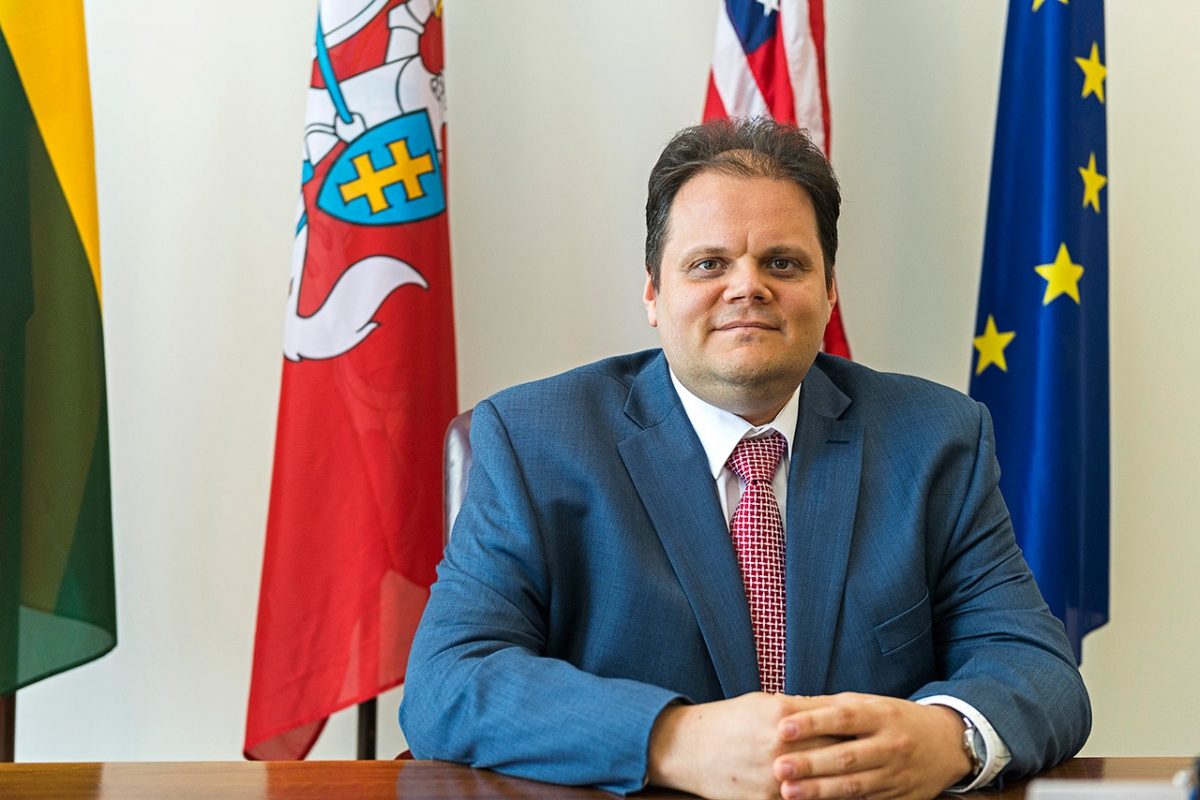
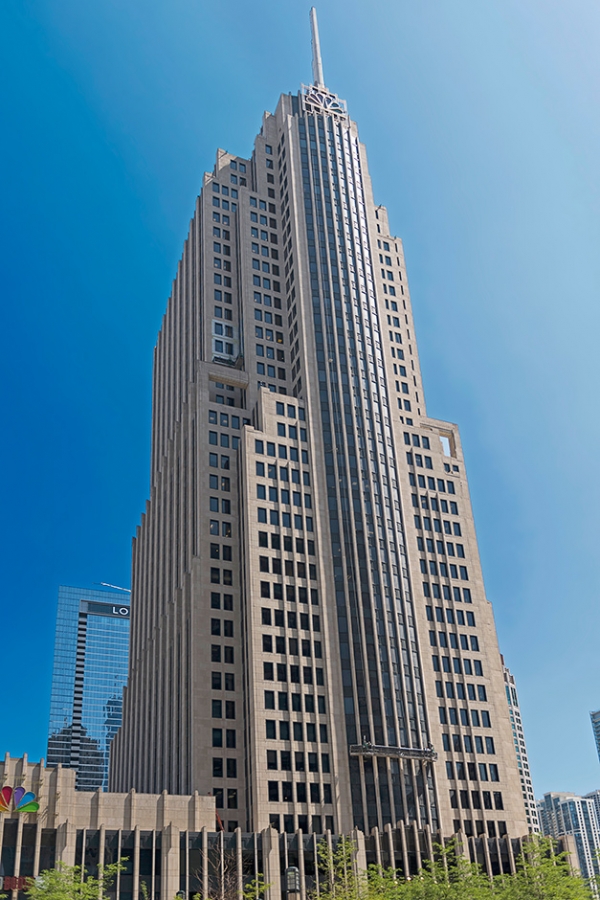
Sitting on the southern shores of Lake Michigan, Chicago is an important transport, financial and cultural hub. It hosts word class universities, world class museums and a famous opera and music scene that make for a fascinating and vibrant place to live and work. The city has to reinvent itself several times, never more dramatic as after the great fire in 1871. Chicago has a long list of sister cities. Most of them were established when the 'windy city', as it is often called, was the second largest metropolis in the USA. Vilnius is a sister city. When these ties were established it was the second city in Lithuania after the (then) capital Kaunas. For more almost 150 years Chicago has attracted large waves of Lithuanian immigrants. Although exact figures are difficult to get at, most likely it is the second largest Lithuanian city in the world. In spite of substantial growth it is now the third largest city in the USA after New York and Los Angeles. The Lithuanian Consulate General in Chicago just moved to new and larger premises in a prestigious downtown location. Outside the building the Lithuania flag is proudly displayed next to some of the other Consulates located in the same building on one of the busiest business and tourist thoroughfares in Chicago. Employing a staff of eight people, makes it a larger operations than many embassies that the country operates abroad. The Consulate General was established in 1924, the same year the Lithuania Embassy was located in the present building in Washington, DC. Just as in Washington, the Consulate remained open, even during Soviet occupation. The US government issued in 1923 a decree establishing the authorisation of a Lithuanian Consulate General. We sit down with Marius Gudynas on a sunny August morning and that desk, on which the decree was signed, it still occupies a central part in the office of a dynamic Consul General.
Lithuania Tribune (LT): Why did the (then) young Lithuanian Republic wanted to open a Consulate General in Chicago?
Marius Gudynas (MG): By 1923 there was a sizable Lithuanian population justifying the establishment of a Consulate General. We have documentation with the first Lithuanian immigrants settling in the Chicago area around 1860 and larger waves of settlers arriving by 1875 to 1880. That included Litvaks that escaped Russian prosecution of Jews or those facing being drafted into the Tsar's army.
LT: Now that the Lithuanian Consul General has opened in Los Angeles, which area is covered from this Consulate General?
MG: Before that opening we provided services to 28 US States central located States, more than half the US, from this office. The Los Angeles office now also covers in addition to the Western coastal states, Nevada, Arizona, Utah and Idaho. The Chicago office will still serve 25 central located States once the Los Angeles office is fully functional.
LT: Are there still a lot of immigrants from Lithuania arriving into the Chicago area?
MG: Not so much anymore. In the last three years it really trickled down to just a few. Most of the immigrants come now through family reunification programmes or for business reasons, particularly start-ups that diversify or require capital. Few immigrants appear to arrive, whilst we hear increasingly more of people returning to Lithuania. That does not detract from the fact that there is a large Lithuanian population here in what I call the Lithuanian Diaspora Capital.
LT: How many Lithuanians are living here in the larger Chicago area?
MG: From the Litvak population, I get a consistent figure of 40,000. The other Lithuanians provide figures that vary largely between 200,000 and 400,000 often already third and fourth generation still referring to themselves as Lithuanians. All together still a large number. Interesting is that many of these, even fourth generation Lithuanians born and living in the USA still speak Lithuanian. Many of these have become prominent in the community here and are great assets for establishing bridges with Lithuania. As a country we should seriously attempt to make more use of these precious assets.
LT: Has there been inward investment from the Chicago area to Lithuania?
MG: Lithuania is seen as a fast growing place with well educated multi-lingual people. In addition to good connections, infrastructure and a standard of living. McKenzie is planning to open a factory to produce American tractors near Vilnius employing 800. Interemedics came initially to establish an office for about 30 in Lithuania, outsourcing some of their work tapping into the English language skills. Then they discovered the multilingual skills of their Lithuania employees exceeded the two languages and explored further options for expansion in Europe. Now they have plans to establish a full European operation based in Kaunas.
The Consul general pauses and then adds..
Lithuania is also making good use of the structural funds in training employees for new tasks that companies require when establishing themselves abroad. That is an important element when companies scout for a suitable location. In a way we are still in the discovery stage when it comes to attracting inward investment. However, it has become clear that US companies are leading in providing investment and jobs in Lithuania. US investment has been the undisputed leader into the country for the last three years now. It is our goal to expand and build on that success as we think there are many more opportunities for US companies in Lithuania. There are many values that we share with Americans and that should make it easier for US companies to succeed.
LT: There is still a lot of opportunity for trade and investment?
MG: If you consider that each American state is a bit the equivalent of a European country, you could argue that this Consulate General covers an area as large as the EU. Each State here has its own government and particular needs and assets. Ambassador Pavilionis (who just returned from the USA to Lithuania) made many contributions during his five years in the USA, but he will be probably best be remembered most for ensuring the opening of the LA Consulate General. That presence will allow us to tap better into numerous opportunities and it will give Lithuania a presence that is important to achieve that. Still far too many Lithuanian companies see the USA as one homogeneous country, whilst in reality it is a collection of diverse markets. Products that can be sold in California may be difficult to find buyers in Chicago or New York, still the West Coast by itself is a very attractive market as large as the largest European countries. That does not even take into consideration production capacity of the Lithuanian or overseas company. Most of the individual states are larger markets for Lithuanian companies than their home market. Analysing the specifics for a given part of the US market are important parts of the marketing plan of a company.
LT: Can you say a bit more about some of these Lithuanian start-ups here in Chicago?
MG: There is a large tech incubator here, called 1871. They look for bright minds and provide an environment to implement some of their ideas. They provide help, mentoring and funds. It is providing 'the garage' environment that in the past created HP, Apple and other successful companies At present we know about 3 Lithuanians working at 1871, including one that is linking medical equipment to an Internet environment. But there is more than just IT. A Lithunia doctor, Gintautas Bieliauskas, specialised in installing artificial heart valves was for year or so based in Chicago. Working for Edwards Lifesciences, he was transferring knowledge, assisting and teaching colleagues in the USA and then moved on to Japan afterwards. Furthermore we also have increasingly technological and scientific exchanges between Lithuanian universities and those based in this city.
LT: What is still on your to do or perhaps you have a wish list?
MG: An important element for business to succeed is ease of access. Making the business case for a direct flight between Chicago and Vilnius should be feasible. Polish LOT flies out of Warsaw to this city and they claim it as one of their most profitable routes. That should not be too dissimilar for someone operating between Lithuania and Chicago. The dream of Darius and Girėnas (who attempted to cross the Atlantic with destination Kaunas) should be a reality well before the centenary anniversary of their flight in 1933. There is plenty of memorabilia of these two pioneers, including a Lituanica street, in Chicago but we need more than memories.
LT: What are some of the lesser know activities that a Consulate General performs?
MG: Connecting people and building bridges, particularly in economic, educational and cultural areas between the USA and Lithunia make up a large part of our task. That is driven by security concerns and our overall well being, but it also is about creating visibility. In addition we connect various parts of the community, local authorities and between here and home. In that way we have evolved from the initial tasks of performing typical consular activities of passports, visas and legitimising documents.
But perhaps it is a good time to remind some of our history here during the 50 years of Soviet occupation. This Consulate operated and was a centre for resistance of the Lithuanian community against an illegal occupation that was never recognised by the USA. The work of Ambassador Lozoraitis is well known and published. However there were many unsung heroes such as Consul General Petras Daužvardis who remained in post here, resisting temptation by the Russians trying to enlist him into their service and become ambassador in Washington, but who remained loyal to his country. He had completed legal studies in the USA, could have earned very well as a lawyer but preferred to serve Lithuania. Consul General Petras Daužvardis, a graduate in law from Georgetown University,d successfully represented hundreds of inheritance cases in court all over the USA contesting Soviet efforts to appropriate estates of deceased Lithuanian nationals. As the longest serving member of the diplomatic service he was also the dean of the Consular corps in Chicago. He is part of our history, yet little is know about his work and efforts. Preserving that is also part of our work.
Article and photograph author - Ludo Segers (The Lithuania Tribune)


